Posts Tagged ‘NVMe’

Part 6: DIY NAS – Installing Two Samsung 990 Pro Gen 4 NVMe M.2 SSD in an Intel NUC 11 Extreme

Monday, December 1st, 2025


Welcome back to Hancock’s VMware Half Hour and to Part 6 of the DIY UNRAID NAS build series.

In this episode I install two Samsung 990 PRO Gen 4 NVMe M.2 SSDs into the Intel NUC 11 Extreme.
The NUC 11 Extreme has a surprisingly capable NVMe layout, providing:

  • 2 × PCIe Gen 4 NVMe slots
  • 2 × PCIe Gen 3 NVMe slots

The video walks through verifying the drives, opening the NUC, accessing both NVMe bays, and installing each SSD step-by-step, including the compute board NVMe slot that is a little more awkward to reach.
The episode finishes in Windows 11 where the drives are validated using Disk Manager and Samsung Magician to confirm that both NVMe SSDs are genuine.


What Is Covered in Part 6

  • Checking the authenticity of Samsung 990 PRO NVMe SSDs
  • Accessing both the bottom and compute-board NVMe slots in the Intel NUC 11 Extreme
  • Installing and securing each NVMe stick
  • Reassembling the NUC 11 Extreme, including panels, shrouds, NIC and PCIe bracket
  • Confirming both NVMe drives in Windows 11
  • Using Samsung Magician to verify that the drives are genuine
  • Preparing the NVMe storage for use in later parts of the UNRAID NAS series

Chapters

00:00 - Intro
00:07 - Welcome to Hancock's VMware Half Hour
00:29 - In Part 6 we are going to fit Samsung 990 PRO NVMe
01:24 - Intel NUC 11 Extreme has 2 x Gen3, 2 x Gen4 slots
01:45 - Check the NVMe are genuine
04:20 - Intel NUC 11 Extreme - open NVMe bottom panel
05:23 - Install first NVMe stick
06:33 - Remove NVMe screw
07:06 - Insert and secure NVMe stick
07:30 - Secure bottom NVMe panel cover
08:40 - Remove PCIe securing bracket
08:54 - Remove side panel
09:11 - Remove NIC
09:44 - Remove fan shroud
09:59 - Open compute board
12:23 - Installing the second NVMe stick
14:36 - Secure NVMe in slot
16:26 - Compute board secured
19:04 - Secure side panels
20:59 - Start Windows 11 and login
21:31 - Check in Disk Manager for NVMe devices
22:40 - This Windows 11 machine is the machine used in Part 100/101
22:44 - Start Disk Management to format the NVMe disks
23:43 - Start Samsung Magician to confirm genuine
25:25 - Both NVMe sticks are confirmed as genuine
25:54 - Thanks for watching

About This Build

This DIY NAS series focuses on turning the Intel NUC 11 Extreme into a compact but powerful UNRAID NAS with NVMe performance at its core.
The Samsung 990 PRO NVMe drives installed in this part will provide a significant uplift in storage performance and will feature heavily in later episodes when the NAS is tuned and benchmarked.


Support the Series

If you are enjoying the series so far, please consider supporting the channel and the content:

  • Like the video on YouTube
  • Subscribe to the channel so you do not miss future parts
  • Leave a comment or question with your own experiences or suggestions
  • Follow along for Parts 7, 8, 9 and beyond

Thank you for watching and for following the build.


Gear Used


More From Hancock’s VMware Half Hour

Enjoy the build and stay tuned for upcoming parts where we continue configuring UNRAID and optimising the NAS.
Do not forget to like, comment and subscribe for more technical walkthroughs and builds.


Support and Honey


Watch More Playlists


Follow Hancock’s VMware Half Hour

Part 5: DIY UNRAID NAS: Making Use of the Free Internal USB Headers

Sunday, November 30th, 2025


Welcome back to Andysworld!*™ and to Part 5 of my DIY UNRAID NAS series.

In this instalment, I explore a small but very useful upgrade: using the free internal USB headers inside the Intel NUC Extreme 11th Gen to hide the UnRAID boot USB neatly inside the chassis. This keeps the build clean, reduces the risk of accidental removal, and makes the system feel much more like a dedicated appliance.


Why Move the UnRAID USB Inside the NUC?

UNRAID must boot from a USB flash drive. Most people leave it plugged into an external port on the back of the system, but the NUC Extreme includes internal USB 2.0 header pins.

By using those internal headers, we can:

  • Keep the USB drive inside the case
  • Free up an external USB port
  • Reduce the chance of accidental removal or damage
  • Improve the overall look and tidiness of the build
  • Make the system feel more like a self-contained NAS appliance

Credit and Hardware Used

This idea came from a very useful Reddit thread:

Reddit source: https://tinyurl.com/yd95mu37
Credit: Thanks to “JoshTheMoss” for highlighting the approach and the required cable.

Adapter Cable

The adapter used in this build was purchased from DeLock:

Adapter product page: https://www.delock.com/produkt/84834/merkmale.html

This adapter converts the internal USB header on the motherboard to a standard USB-A female connector, which is ideal for plugging in the UnRAID boot drive.


What Happens in Part 5

In this episode I:

  • Open up the Intel NUC Extreme 11th Gen chassis
  • Locate the unused internal USB header on the motherboard
  • Prepare the UnRAID USB stick, wrapping it in Kapton tape for additional insulation and protection
  • Install the DeLock internal USB adapter
  • Route and position the cable neatly inside the chassis
  • Connect the USB stick to the internal adapter (with the usual struggle of fitting fingers into a very small case)
  • Confirm that the system still boots correctly from the now-internal USB device
  • Give a short preview of what is coming next in Part 6

Video Chapters

00:00 – Intro
00:07 – Welcome to Hancock's VMware Half Hour
00:47 – Using the free internal USB headers
01:05 – Reddit Source – https://tinyurl.com/yd95mu37
01:17 – Kudos to "JoshTheMoss"
02:32 – The Reddit Post
02:44 – Purchased from – https://www.delock.com/produkt/84834/merkmale.html
02:59 – Intel NUC Extreme 11th Gen close-up
03:58 – Internal USB header left disconnected
04:36 – USB flash drive is used for UnRAID
04:49 – Wrapped USB flash drive in Kapton Tape
05:31 – Fit the cable with fat fingers
07:09 – Part 6 – NVMe Time
07:51 – 4 × 4 TB Samsung 990 PRO NVMe Gen 4
08:25 – Thanks for watching

Watch the Episode

Embedded video:


Follow the DIY UNRAID NAS Series on Andysworld!*™

This project is progressing nicely, and each part builds on the last. In Part 6, I move on to storage performance and install 4 × 4 TB Samsung 990 PRO Gen 4 NVMe SSDs for serious throughput.

If you are interested in homelab builds, UNRAID, VMware, or just general tinkering, keep an eye on the rest of the series here on Andysworld!*™.

Thanks for reading and for supporting the site.

Part 1: Building a DIY NVMe NAS with the Intel NUC 11 Extreme (Beast Canyon)

Saturday, November 15th, 2025


Part 1: The Hardware Build

Welcome to AndysWorld.org.uk! Today, we’re diving into a project that’s perfect for anyone looking to build a powerful, yet compact, DIY Network-Attached Storage (NAS) solution. In this post, I’ll walk you through the first part of building a ‘MEGA’ NVMe NAS using the Intel NUC 11 Extreme (Beast Canyon). This mini-PC packs a punch with its powerful hardware, making it a great choice for a NAS build, especially when combined with UnRAID to handle storage and virtualization.


Why Choose the Intel NUC 11 Extreme for a NAS?

If you’ve been looking into NAS setups, you know the balance between power, size, and expandability is crucial. The Intel NUC 11 Extreme (Beast Canyon) checks all the right boxes, offering:

  • Compact Form Factor: It’s a small but powerful solution that doesn’t take up much space.

  • High-Performance NVMe Support: NVMe drives provide incredibly fast data transfer speeds—perfect for a NAS that needs to handle heavy workloads.

  • Flexibility for Virtualization: With UnRAID, you can set up multiple virtual machines, containers, and storage arrays, making it a versatile solution for any home or small office.

For this build, we’re focusing on using NVMe storage for high-speed access to files and a 64GB Kingston Fury DDR4 RAM kit to ensure smooth performance under load.


What You’ll Need for This Build:

  • Intel NUC 11 Extreme (Beast Canyon)

  • 64GB Kingston Fury DDR4 RAM

  • 2 x 512GB XPG GAMMIX NVMe SSDs

  • UnRAID Operating System

  • A few basic tools for assembly (screwdriver, anti-static mat, etc.)

If you’ve never worked with the Intel NUC before, don’t worry! I’ll guide you through every step of the assembly process. Let’s get into it!


Step-by-Step Build Process:

1. Unboxing the Intel NUC 11 Extreme

First things first, let’s unbox the Intel NUC 11 Extreme (Beast Canyon). When you open the box, you’ll find the compact, sleek chassis, which packs quite a punch for such a small form factor. This NUC is equipped with an 11th Gen Intel Core i7 processor and can support a variety of high-speed storage options, including NVMe SSDs.

2. Installing the RAM and NVMe Drives

With the NUC unboxed, the next step is to install the Kingston Fury RAM and XPG GAMMIX NVMe SSDs. Be careful during installation—especially with the tiny NVMe screws! The NUC has an easy-to-access compute board where both the RAM and NVMe drives will fit.

  • Installing the RAM: Simply slot the 64GB Kingston Fury DDR4 RAM sticks into the dedicated slots, making sure they’re fully seated.

  • Installing the NVMe SSDs: These go directly onto the motherboard and can be secured using small screws. Be sure to handle them gently as the connectors are quite delicate.

3. Reassembling the NUC

Once the RAM and NVMe drives are installed, it’s time to reassemble the NUC. This involves:

  • Reattaching the fan tray and shroud

  • Reinstalling the side and back panels

At this stage, everything should feel secure and ready for the next steps.


Why NVMe Storage for a NAS?

NVMe drives are game-changers when it comes to NAS storage. Here’s why:

  • Speed: NVMe offers lightning-fast read/write speeds compared to SATA SSDs or traditional HDDs. For anyone who works with large files or needs to serve data quickly, NVMe is a must.

  • Future-Proofing: With more applications and data being handled in the cloud, having NVMe in your NAS ensures your storage solution is ready for the future.

  • Reliability: NVMe drives are more reliable than traditional spinning hard drives, with less moving parts and faster data recovery times.


What’s Next?

Now that we’ve completed the hardware installation, in the next post, we’ll dive into setting up UnRAID on the NUC. UnRAID will allow us to easily configure our storage arrays, virtual machines, and containers—all from a user-friendly interface. Stay tuned for Part 2, where we’ll cover configuring the software, optimizing the NAS, and making sure everything runs smoothly.


Helpful Resources:

To help you along the way, I recommend checking out the blog posts from two experts in the field:


Wrapping Up

This build was just the beginning! The Intel NUC 11 Extreme provides an excellent foundation for a fast, reliable NAS. With NVMe storage and the flexibility of UnRAID, you can build a high-performance system that’s both versatile and compact.

What do you think of this build? Have you used the Intel NUC for similar projects? Drop a comment below or connect with me on social media—I’d love to hear about your experiences!


Follow Andy’s World for More DIY Tech Projects
Don’t forget to check out the latest posts and tutorials on AndysWorld.org.uk to keep up with all things tech and DIY. Happy building!


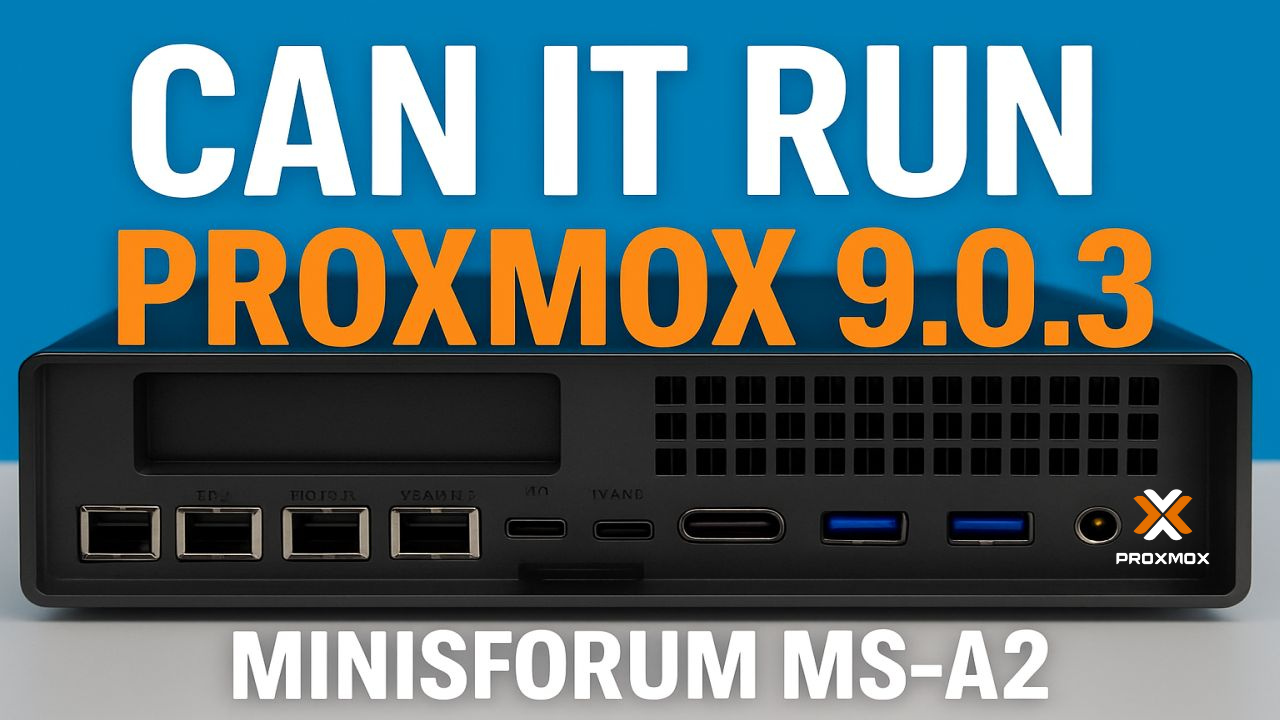
Minisforum MS-A2 Can it Play Proxmox 9.0.3 Minisforum MS-A2 Series Part 14 Ultimate #homelab

Tuesday, August 19th, 2025

So I went to the Dark Today!


Minisforum MS-A2 Can it Play Proxmox 9.0.3 Minisforum MS-A2 Series Part 14 Ultimate #homelab

In this episode of the Minisforum MS-A2 Series, I take the brand-new MS-A2 and put it to the test by installing Proxmox VE 9.0.3. From booting off Ventoy, setting up the U.2 Samsung NVMe, configuring root credentials, and finalizing the installation — all the way to creating and running a Windows Server 2025 VM — we’ll see if the MS-A2 can truly handle Proxmox in a homelab environment.

Along the way, I hit some fun quirks (green screens, missing drivers, and Proxmox guest tools), but by the end we’ve got Windows Server installed and running smoothly.

Minisforum MS-A2 – The Ultimate #Homelab Server for VMware vSphere, VVF, and VCF?

Monday, June 30th, 2025

Lately, it feels like every VMware vExpert has been posting photos of their compact lab servers — and I’ll be honest, I was starting to feel left out.

So, I joined the club.

I picked up the new Minisforum MS-A2, and I’ve not looked back. This isn’t just another NUC alternative — it’s a serious powerhouse in a tiny chassis, perfect for VMware enthusiasts building or upgrading their vSphere, VVF, or VCF test environments.

Let’s dig into what makes this little beast a perfect addition to any #homelab setup in 2025.

Hardware Highlights – Not Your Average Mini PC
The MS-A2 isn’t just punching above its weight — it’s redefining what’s possible in a compact lab node.

Key Specs:
CPU: AMD Ryzen™ 9 9955HX – 16 cores / 32 threads of Zen 5 power

Memory: Dual DDR5-5600MHz SODIMM slots – up to 96GB officially, but…

Storage:

3× M.2 PCIe 4.0 slots (22110 supported)

Supports U.2 NVMe – great for enterprise-grade flash

Networking:

Dual 10Gbps SFP+ LAN

Dual 2.5GbE RJ45 ports

Wi-Fi 6E + Bluetooth 5.3 (going to replace this with more NVMe storage!)

Expansion:

Built-in PCIe x16 slot (supports split mode – ideal for GPUs, HBAs, or NICs)

This is homelab gold. It gives you the raw compute of a full rack server, the storage flexibility of a SAN box, and the network fabric of a modern datacenter — all under 2L in size.

How I Configured Mine – still sealed in box as I write – video incoming!
I purchased mine barebones from Amazon, and — as of writing — it’s still sealed in the box. Why? I’m waiting for all the parts to arrive.

Most importantly, I’ll be upgrading it with:
128GB of Crucial DDR5-5600 SODIMMs (2×64GB) — pushing beyond the official spec to see just how much performance this little box can handle.

Once everything’s here, I’ll be unboxing and assembling it live on a future episode of Hancock’s VMware Half Hour. Stay tuned if you want a front-row seat to the full setup, testing, and VMware lab deployment.

Perfect for VMware Labs: vSphere 8/9, VVF, and VCF
Whether you’re testing ESXi on bare metal or running full nested labs, this spec ticks every box.

ESXi Bare Metal Capable
The Ryzen 9 9955HX and AMD chipset boot vSphere 8.0U2 and 9.0 Tech Preview cleanly with minimal tweaks. Use community networking drivers or USB NIC injectors if needed.

VVF / VCF in a Box
If you’re exploring VMware Validated Foundation (VVF) or want a self-contained VCF lab for learning:

16C/32T lets you run nested 3-node ESXi clusters + vCenter + NSX-T comfortably

128GB RAM gives breathing room for resource-heavy components like SDDC Manager

PCIe 4.0 + U.2 = blazing fast vSAN storage

Dual 10Gb SFP+ = NSX-T overlay performance lab-ready

Community Validation – I Was Late to the Party
Fellow vExpert Daniel Krieger was ahead of the curve — writing about the MS-A2 months ago in his excellent blog post here:
sdn-warrior.org/posts/ms-a2

Then vExpert William Lam added his voice to the conversation with a guide to running VMware Cloud Foundation (VCF) on the MS-A2:
williamlam.com/2025/06/vmware-cloud-foundation-vcf-on-minisforum-ms-a2.html

Seeing both of them validate the MS-A2 pushed me over the edge — and I’m glad I jumped in.

Setup Tips (Soon!)
Once the unboxing is done, I’ll share:

BIOS tweaks: SVM, IOMMU, PCIe bifurcation

NIC setup for ESXi USB fling and 10GbE DAC

Storage layout for vSAN and U.2/NVMe configs

Full nested VCF/VVF deployment guide

Considerations
Still not officially VMware HCL — but community-tested

Ryzen platform lacks ECC memory — standard for most mini-PC builds

PCI passthrough needs thoughtful planning for IOMMU groupings

Ideal Use Cases
Nested ESXi, vSAN, vCenter, NSX labs

VVF deployment simulations

VCF lifecycle manager testing

Tanzu Kubernetes Grid

NSX-T Edge simulations on 10GbE

GPU or high-speed NIC via PCIe slot for advanced lab scenarios

Final Thoughts
The Minisforum MS-A2 with Ryzen 9 9955HX is a serious contender for the best compact homelab system of 2025. Whether you’re diving into vSphere 9, experimenting with VVF, or simulating a full VCF environment, this mini server brings serious firepower.

It may still be in the box for now —
—but soon, it’ll be front and center on Hancock’s VMware Half Hour, ready to power the next chapter of my lab.

Join the Conversation
Got an MS-A2 or similar mini-monster? Share your specs, test results, or VMware experience — and tag it:

#VMware #vSphere #VCF #VVF #homelab #MinisforumMSA2 #10GbE #vExpert

Part 40: HOW TO: Create a VMware vSphere 7.0.3 vSAN datastore using Intel Optane NVMe storage devices

Saturday, October 12th, 2024

In this video presentation which is part of the Hancock’s VMware Half Hour HOW TO Video Series I will show you HOW TO: Create a VMware vSphere vSAN using Intel Optane NVMe storage devices.

The storage devices we are using in this video are the Intel® Optane™ SSD DC P4800X Series 375GB, 2.5in PCIe x4, 3D XPoint™, but this procedure can be use to add any compatible storage devices in ESXi to a vSAN datastore.

This video follows on from the follow video in this series

Part 36: HOW TO: Select an inexpensive HCL Certified 10GBe network interfaces for vSphere ESXi 7.0 and vSphere ESXi 8.0 for VMware vSphere vSAN

Part 37: HOW TO: Change the LBA sector size of storage media to make it compatible with VMware vSphere Hypervisor ESXi 7.0 and ESXi 8.0.

Part 39: HOW TO: Create a VMware vSphere Distributed Switch (VDS) for use with VMware vSphere vSAN for the VMware vSphere vSAN Cluster.

If you are creating a design for VMware vSphere vSAN for a Production environment, please ensure you read the  VMware Cloud Foundation Design Guide 01 JUN 2023 – this should be regarded as The Bible!

References

HOW TO: FIX the Warning System logs on host are stored on non-persistent storage, Move system logs to NFS shared storage.

WHAT’S HAPPENING WITH INTEL OPTANE? – Mr vSAN – Simon Todd

Matt Mancini blog

VMware vSAN 8.0 U1 Express Storage Architecture Deep Dive

VMware vSAN 7.0 U3 Deep Dive Paperback – 5 May 2022