Archive for the ‘ExpertsExchange’ Category

From Rookie to Elite: My 14-Year Journey at Experts Exchange

Tuesday, September 17th, 2024

In 2010, I made my return to Experts Exchange, the original and No.1 tech community, first launched in 1996. My journey actually began in 2003 when I first stumbled across the platform while seeking assistance with an Outlook Exchange OWA issue. Experts Exchange quickly became my go-to resource for problem-solving.

A significant part of my re-engagement was thanks to my friend from the University of Plymouth, Richard Quadling, a PHP expert and passionate advocate for Experts Exchange. Seeing Richard proudly wearing his EE “Genius” t-shirt made me want one of my own. Naturally, I asked him, “How do I get one?”

Richard’s advice was straightforward: contribute to the community and answer questions. I asked if there were VMware or Virtualization topics I could help with, and he pointed me in the right direction. My goal was set—earn that Genius t-shirt and top the VMware leader board.

Early Achievements

I started answering questions in late 2010 and, within a few weeks, had earned 50,000 points, achieving my first milestone and receiving my Master T-shirt. Over the next few months, my journey continued with more milestones:

  • Guru: January 8, 2011
  • Wizard: January 23, 2011
  • Sage: February 18, 2011
  • Genius: May 13, 2011

By the end of 2011, I had secured a position as one of the top contributors. At the 8th Annual Expert Awards, I was honoured with:

  • Expert of the Year: 1st place
  • Juggernaut: 1st place
  • The Ally: 1st place
  • Titan – VMware: 4th place

My journey had only just begun. The Quarterly Awards were discontinued in 2012, but my contributions continued to be recognized unofficially, later becoming known as “Front Runners.”

Rising Through the Ranks

As I moved forward, I broke several records. In 2012, I became the first VMware Savant, reaching 10,000,000 points on November 25. Other notable achievements followed:

  • Prodigy in VMware (December 2012)
  • Genius in VMware (May 2011)
  • The first Virtualization Prodigy (November 2013)

By this time, I had earned a life membership to Experts Exchange and received their 5 Million Point Club email.

The community became a significant part of my life, and my achievements continued to stack up. By the end of 2015, I was named Expert of the Year, The Detective, and The Scribe for five consecutive years (2011-2015)—a record I believe no other Expert has achieved!

Unforgettable Milestones

In 2017, I hit another high, receiving the coveted ELITE Experts Exchange T-shirt on February 20. That year also marked my last Expert of the Year title, capping off an incredible seven consecutive years at the top.

VMworld 2015

Alongside these achievements, Experts Exchange awarded me an all-inclusive trip to VMworld 2015 in Barcelona,

Experts Exchange Core 2023

and in 2023, I received an invitation to Experts Exchange Core 2023.

The Secret Milestone

Hall of Fame – No.1

In addition to these well-known achievements, there was one secret milestone I had been chasing for over 11 years: becoming the No. 1 expert on the Experts Exchange leader board. On May 6, 2022, I surpassed Guy Hengel (angelIII), reaching 40,983,813 points and claiming the top spot. Today, as I write this in Autumn 2024, I have accumulated 43,843,073 points—a testament to years of dedication and passion for helping others.

Testimonials from the Community

Over the years, I’ve received some incredible testimonials that highlight the impact of my contributions:

  • “Cheers Hancocka for your out-of-hours help, you deserve all the points and more!”
  • “Andrew responds quickly, competently, and zeros in on the fix. He’s like a VMware Yoda!”
  • “What VMware couldn’t solve, hanccocka could!”
  • “Dude, when you finally get your pic of you wearing cape + mask I want my Xlarge pre-ordered.”

These words from the community mean the world to me, and they have fuelled my drive to continue giving back.

Wrapping Up

In conclusion, if you have the patience, dedication, and passion for an IT topic, and want to teach, share knowledge, and help others solve their tech problems, join Experts Exchange. Answer questions, write articles, publish videos—you never know, you might just become the next No. 1 point earner or even an Expert of the Year.

As my brother always says, “Follow your dreams.” While this wasn’t exactly a dream, it was a secret desire:

  • Obtain a Genius T-Shirt 
  • Earn 1,000,000 points in the VMware Topic 
  • Be No. 1 on the VMware Leaderboard 
  • Get an Elite T-shirt 
  • Become the No. 1 Overall Point Earner 

Thanks to Experts Exchange for providing such an incredible platform, and to the community for asking the questions that allowed me to grow and achieve these milestones. Here’s to many more years of collaboration and success in the No. 1 technology community on the web!

Thanks Richard !

EE Elite T-Shirt

EE Elite T-Shirt


All my Expert Exchange Awards 2011-2024

All my Expert Exchange Awards 2011-2024

All my Expert Exchange Awards 2011-2024

All my Expert Exchange Awards 2011-2024
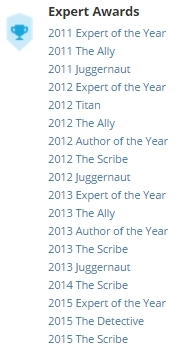
All my Expert Exchange Awards 2011-2024

All my Expert Exchange Awards 2011-2024

Behind the Scenes at Hancock’s VMware Half Hour – Crafting High-Quality Video Content

Monday, September 16th, 2024

Creating engaging, professional-quality video content has become more accessible than ever. At Hancock’s VMware Half Hour, we combine the best tools in the industry—OBS Studio and DaVinci Resolve—with creative expertise to bring VMware-focused content to life. This post gives you an inside look at how we use these tools to produce high-quality videos for platforms like Experts Exchange and YouTube.

The Tools of the Trade

Our production process revolves around two core tools: OBS Studio and DaVinci Resolve, which work together seamlessly to help us create content that stands out.

1. OBS Studio – Recording Made Easy

OBS Studio is an open-source video recording tool that allows us to capture high-quality footage of VMware demos, tutorials, and technical guides. Its flexible interface lets us integrate multiple video sources, including screen shares, webcam feeds, and even external slideshows or graphics, to create a dynamic viewing experience.

Key features we rely on:

  • Screen and multi-source recording
  • Custom overlays and transitions
  • Real-time audio/video synchronization

2. DaVinci Resolve – Polishing Our Work

Once we’ve recorded the content, DaVinci Resolve takes over to handle post-production. It offers advanced editing, color correction, and audio optimization capabilities, ensuring every video looks professional.

Features we use:

  • Non-linear video editing for clean cuts
  • Color grading to maintain consistency across videos
  • Special effects and audio enhancements for a polished finish

Reaching Our Audience: Experts Exchange and YouTube

We publish content on platforms like Experts Exchange, which caters to a professional, technical audience, and YouTube, where we reach a wider community. Each platform has its unique content needs, but our consistent goal is to make VMware concepts accessible, useful, and engaging.

For our Experts Exchange audience, we provide detailed technical guides and troubleshooting advice. You can follow our work there through the Experts Exchange page for VMware-specific articles and tutorials.

Where to Find Hancock’s VMware Half Hour

You can watch our episodes on several platforms. If you’re interested in keeping up with our latest videos, you can follow us on YouTube, Experts Exchange, or check out our Hancock’s VMware Half Hour homepage for updates. We cover a range of topics, from troubleshooting and updates to deeper technical dives into VMware technologies?

Experts Exchange

Twitter

Mastadon

LinkedIn

YouTube

GitHub

Part 18: HOW TO: Update VMware ESXi 7U1 (7.0.1) to VMware ESXi 7U2a (7.0.2) using an ISO image

Monday, September 9th, 2024

This video will show you how to update ESXi 7U1 to ESXi 7.0U2a using an ISO image to get your system up to the latest release. In this tutorial, the version of ESXi 7.0 installed is ESXi 7.0U1, but this article can be followed to upgrade any version of ESXi 7.0. If your ESXi host has access to the internet, there is a quicker method shown in this video – HOW TO: Update VMware ESXi 7.0U2 to ESXi 7.0U2a direct from VMware.

VMware has removed many older legacy processors (CPUs) from ESXi 7.0U2, and also storage and network controllers. Please check the VMware Hardware Compatibility Lists (HCL) here.

for more additional guidance and a step by step tutorial with screenshots, which supports this video, please see the following article, which this video is based on  HOW TO: Upgrade VMware ESXi 5.5 to VMware ESXi 6.0 using an ISO image

It is not recommended to install ESXi 7.0 on USB or SD cards because of higher write I/O, and the SD cards are currently suffering because they are not higher endurance. Problems have been found in the wild.

It is technically still supported; eventually, this may filter down through the server vendors…

Some additional information regarding the use of USB and SD cards with VMware vSphere Hypervisor 7.0 (ESXi 7.0) and installations.

Installing ESXi on a supported USB flash drive or SD flash card (2004784)

vSphere 7 – ESXi System Storage Changes

VMware vSphere 7.x on Dell EMC PowerEdge Servers Getting Started Guide

Virtual SAN Considerations When Booting from a Flash Device

VMFS-L Locker partition corruption on SD cards in ESXi 7.0 (83376)

Part 17: HOW TO: Update VMware ESXi 7.0U2 to ESXi 7.0U2a in 5 easy steps

Monday, September 9th, 2024

This video will show you how to update ESXi 7.0U2 to ESXi 7.0U2a in 5 easy steps to get your system up to the latest release. In this tutorial, the version of ESXi 7.0 installed is ESXi 7.0U2, released on 20 April 2021, but this article can be followed to upgrade any version of ESXi 7.0. If your ESXi host has access to the internet, there is a quicker method shown in this video – HOW TO: Update VMware ESXi 7.0U2 to ESXi 7.0U2a direct from VMware.
VMware has removed my older legacy processors (CPUs) from ESXi 7.0U2, and also storage and network controllers, please check the VMware Hardware Compatability Lists (HCL) here.

for more additional guidance and a step by step tutorial with screenshots, which supports this video, please see the following article which this video is based on HOW TO: Update VMware ESXi 7.0U2 to ESXi 7.0U2a in 5 easy steps

It is important to note in this video when I discuss the use of USB flash drives and SD cards for installations of ESXi 7.0 the word “not-supported” should be replaced with “not recommended“!

It is not recommended to install ESXi 7.0 on USB or SD cards, because of higher write I/O, and the SD cards are currently suffering because they are not higher endurance. Problems have been found in the wild.

It is technically still supported, eventually, this may filter down through the server vendors.

Some additional information regarding the use of USB and SD cards with VMware vSphere Hypervisor 7.0 (ESXi 7.0), and installations.

Installing ESXi on a supported USB flash drive or SD flash card (2004784)

vSphere 7 – ESXi System Storage Changes

VMware vSphere 7.x on Dell EMC PowerEdge Servers Getting Started Guide

Virtual SAN Considerations When Booting from a Flash Device

VMFS-L Locker partition corruption on SD cards in ESXi 7.0 (83376)

Part 16: HOW TO: Update VMware ESXi 7.0U2 to ESXi 7.0U2a direct from VMware

Monday, September 9th, 2024

This video will show you how to update ESXi 7.0U2 to ESXi 7.0U2a in 2 easy steps to get your system up to the latest release. In this tutorial, the version of ESXi 7.0 installed is ESXi 7.0U2, released on 20 April 2021, but this article can be followed to upgrade any version of ESXi 7.0. If your ESXi host has access to the internet, this method will pull the update direct from the internet and update the ESXi host. If you prefer the slower old fashioned method or your host does not have access to the internet, please follow this article – HOW TO: Update VMware ESXi 7.0U2 to ESXi 7.0U2a in 5 easy steps

VMware has removed my older legacy processors (CPUs) from ESXi 7.0U2, and also storage and network controllers, please check the VMware Hardware Compatibility Lists (HCL) here.

for more additional guidance and a step by step tutorial with screenshots, which supports this video, please see the following article which this video is based on HOW TO: Update VMware ESXi 7.0U2 to ESXi 7.0U2a direct from VMware.

Part 15: HOW TO: Shrink or Reduce a VMware Virtual Machine Disk (VMDK) using VMware vCenter Converter Standalone v6.2.0.1

Tuesday, September 3rd, 2024

In this video, I will show you how to perform a Virtual to Virtual conversion of a Windows virtual machine to VMware vSphere Hypervisor 7.0 (ESXi 7.0) using VMware vCenter Converter Standalone 6.2.0.1, and in the same conversion process shrink and reduce the size of the virtual disk.

For more guidance and a step by step tutorial with screenshots, which supports this video, please see the following article which this video is based on  HOW TO: Shrink or Reduce a VMware Virtual Machine Disk (VMDK) using VMware vCenter Converter Standalone v5.5.2

Windows XP Professional can be P2Ved using VMware vCenter Converter Standalone 6.2.0.1.

Other reference material which I recommend reading around the use of VMware vCenter Converter Standalone 6.2.0.1.

HOW TO:  P2V, V2V for FREE – VMware vCenter Converter Standalone 6.2.0.1

HOW TO: FAQ VMware P2V Troubleshooting

 HOW TO: Shrink or Reduce a VMware Virtual Machine Disk (VMDK) using VMware vCenter Converter Standalone v5.5.2

Part 14: HOW TO: P2V a Windows operating system computer to VMware vSphere Hypervisor 7.0 (ESXi 7.0)

Tuesday, September 3rd, 2024

In this video, I will show you how to perform a Physical to Virtual conversion of a Windows computer to VMware vSphere Hypervisor 7.0 (ESXi 7.0) using VMware vCenter Converter Standalone 6.2.0.1.

The operating system used in this demonstration is Windows XP Professional, but the same procedure can be used for any Windows operating system.

For more guidance and a step by step tutorial with screenshots, which supports this video, please see the following article which this video is based on HOW TO:  P2V a Windows XP computer to VMware vSphere Hypervisor 7.0 (ESXi 7.0)

Windows XP Professional can be P2Ved using VMware vCenter Converter Standalone 6.2.0.1.

Other reference material which I recommend reading around the use of VMware vCenter Converter Standalone 6.2.0.1.

HOW TO:  P2V, V2V for FREE – VMware vCenter Converter Standalone 6.2.0.1

HOW TO: FAQ VMware P2V Troubleshooting

 HOW TO: Shrink or Reduce a VMware Virtual Machine Disk (VMDK) using VMware vCenter Converter Standalone v5.5.2

HOW TO: Perform a Physical to Virtual (P2V) Conversion the easy way from a computer backup (image).

Part 13: HOW TO: Backup (Export) and Restore (Import) virtual machines to VMware vSphere Hypervisor 7.0 for FREE

Tuesday, September 3rd, 2024

In this video we will show you HOW TO: Backup (Export) and Restore (Import) virtual machines to VMware vSphere Hypervisor 7.0 for FREE. This procedure can be followed to backup (export) and restore (import) any virtual machine hosted on the VMware vSphere Hypervisor 7.0 host server.

For more guidance and a step by step tutorial with screenshots, which supports this video, please see the following article which this video is based on HOW TO: Backup (Export) and Restore (Import) virtual machines to VMware vSphere Hypervisor 7.0 for FREE

There are many third-party backup solutions available; here are some of my favorites in no particular order.

Coheisty Data Protect

Nakivo Backup and Replication

Veeam Backup and Replication

Part 12: HOW TO: Install open-vm-tools for Linux on a VMware Linux virtual machine on a VMware vSphere Hypervisor 7.0 (ESXi 7.0) Host Server

Thursday, August 29th, 2024

In this video, I will show you HOW TO: Install Open Virtual Machine Tools for Linux on a VMware Linux virtual machine on a VMware vSphere Hypervisor 7.0 (ESXi 7.0) Host Server, using the VMware Host Client. The virtual machine has Ubuntu 20.04 LTS Desktop edition installed.

For more guidance and a step by step tutorial with screenshots, which supports this video, please see the following article which this video is based on HOW TO: Install open-vm-tools for Linux on a VMware Linux virtual machine on a VMware vSphere Hypervisor 7.0 (ESXi 7.0) Host Server

Part 11: HOW TO: Install VMware Tools for Linux on a VMware Linux virtual machine on a VMware vSphere Hypervisor 7.0 (ESXi 7.0) Host Server

Thursday, August 29th, 2024

In this video, I will show you HOW TO: Install VMware Tools for Linux on a VMware Linux virtual machine on a VMware vSphere Hypervisor 7.0 (ESXi 7.0) Host Server, using the VMware Host Client. The virtual machine has Ubuntu 20.04 LTS Desktop edition installed.

For more guidance and a step by step tutorial with screenshots, which supports this video, please see the following article which this video is based on HOW TO: Install VMware Tools for Linux on a VMware Linux virtual machine on a VMware vSphere Hypervisor 7.0 (ESXi 7.0) Host Server