Archive for the ‘All’ Category

How to Repair a vSAN Disk Group: Step-by-Step

Wednesday, September 18th, 2024

Have you ever faced a vSAN disk group issue that left you scratching your head? You’re not alone. In this guide, we’ll walk through the process of vSAN disk group repair, a critical skill for any VMware administrator. We’ll cover everything from troubleshooting to recreating healthy disk groups, ensuring your vSAN environment stays robust and reliable.

Understanding vSAN Disk Group Issues

vSAN disk groups are the building blocks of your VMware vSAN storage. When they become unhealthy, it can lead to data unavailability and performance issues. Common causes include:

  • Hardware failures
  • Firmware incompatibilities
  • Configuration errors

It’s important to note that using non-HCL (Hardware Compatibility List) compatible hardware can increase the likelihood of these issues. While we’ll demonstrate a repair process, always aim to use VMware-approved hardware in production environments.

Troubleshooting vSAN Disk Group Health

Before diving into repairs, it’s crucial to identify the problem. Here’s how to spot unhealthy disk groups:

1. Check the vSphere GUI

Log into your vSphere client and navigate to the vSAN section. Look for any disk groups marked as “Unhealthy” or with warning icons.

2. Run a vSAN Health Check

Use the built-in vSAN Health Check tool to get a comprehensive view of your vSAN environment’s health.

3. Review ESXi Logs

Sometimes, the ESXi logs can provide more detailed information about the cause of disk group issues.

Remember, before attempting any repairs, always back up your data. vSAN issues can potentially lead to data loss, so it’s better to be safe than sorry.

vSAN Disk Group Repair: The SSH Method

While the vSphere GUI often allows you to remove and recreate disk groups, sometimes you’ll need to use ESXi SSH commands for more stubborn issues. Here’s how:

1. Enable SSH on the ESXi Host

First, enable SSH access on the affected ESXi host through the vSphere client or the Direct Console User Interface (DCUI).

2. Connect via SSH

Use an SSH client to connect to your ESXi host. You’ll need administrative credentials.

3. Remove the Problematic Disk Group

Use the following command to remove the disk group:

esxcli vsan storage remove -u <disk_group_uuid>

Replace <disk_group_uuid> with the UUID of the problematic disk group. You can find this UUID in the vSphere client.

4. Verify Removal

After running the command, refresh the vSphere client and verify that the disk group has been removed.

Recreating a Healthy vSAN Disk Group

Once you’ve removed the problematic disk group, it’s time to create a new, healthy one. Here’s how:

1. Identify Available Disks

In the vSphere client, navigate to the storage devices section of your host. Look for unclaimed disks that can be used for your new disk group.

2. Select Cache and Capacity Tiers

Choose an appropriate SSD for your cache tier and HDDs or SSDs for your capacity tier. Remember, the cache tier should be a high-performance SSD.

3. Create the New Disk Group

In the vSphere client:

  1. Go to the vSAN section
  2. Click on “Add Disk Group”
  3. Select your cache and capacity disks
  4. Confirm and create the disk group

4. Monitor the Creation Process

Keep an eye on the tasks pane in vSphere to ensure the disk group creation completes successfully.

Post-Repair vSAN Health Check

After repairing your disk group, it’s important to verify that everything is functioning correctly:

1. Run Skyline Health Check

Use the vSAN Skyline Health tool to perform a comprehensive health check of your vSAN environment.

2. Verify Virtual Object Status

Check that all your virtual machines and other vSAN objects are accessible and performing as expected.

3. Check Hosts in Maintenance Mode

If any hosts were put into maintenance mode during the repair process, ensure they’re brought back online and fully integrated into the vSAN cluster.

Best Practices for vSAN Storage Management

To minimize the chances of future disk group issues, consider these best practices:

  • Perform regular health checks and monitoring
  • Use only VMware HCL compatible hardware
  • Keep ESXi hosts and vSAN up to date with the latest patches
  • Implement proper capacity planning for your vSAN environment
  • Set up alerts for disk failures and performance issues

By following these guidelines, you’ll create a more stable and reliable vSAN environment, reducing the need for emergency repairs.

Mastering vSAN disk group repair is an important skill for any VMware administrator. While it can be challenging, especially when dealing with non-HCL hardware, the process we’ve outlined should help you navigate most issues. Remember, prevention is always better than cure, so invest time in proper planning, monitoring, and maintenance of your vSAN environment.

In our next post, we’ll dive deeper into troubleshooting vSAN cluster issues, so stay tuned for more VMware insights!

FAQ (Frequently Asked Questions)

What causes vSAN disk groups to become unhealthy?

vSAN disk groups can become unhealthy due to various reasons, including hardware failures, firmware incompatibilities, configuration errors, or using non-HCL compatible hardware. Regular monitoring and using approved hardware can help prevent these issues.

Can I repair a vSAN disk group without using SSH?

In many cases, you can repair vSAN disk groups using the vSphere GUI. However, for more stubborn issues, SSH access and command-line tools may be necessary.

How often should I run vSAN health checks?

It’s recommended to run vSAN health checks regularly, ideally daily or weekly, depending on your environment’s criticality. Additionally, set up automated alerts to notify you of any issues promptly.

What should I do if I can’t remove a disk group using the vSphere GUI?

If the GUI method fails, you can use the ESXi CLI command “esxcli vsan storage remove” via SSH to forcefully remove the problematic disk group. Always ensure you have backups before attempting this.

Is it safe to use consumer-grade SSDs in a vSAN environment?

While it’s possible to use consumer-grade SSDs, it’s not recommended for production environments. VMware’s Hardware Compatibility List (HCL) provides a list of tested and approved hardware for vSAN, which helps ensure stability and performance.

VMware ESXi Upgrade: Simplify with vLCM

Wednesday, September 18th, 2024

Are you looking to streamline your VMware ESXi upgrade process? vSphere Lifecycle Manager (vLCM) offers a powerful solution for managing ESXi updates efficiently. In this post, we’ll walk through the steps of performing a VMware ESXi upgrade using vLCM, specifically focusing on the ESXi 7.0 U3q update. We’ll also discuss the benefits of VLCM over manual methods and address some common questions about VMware support and licensing.

Preparing for the ESXi 7.0 U3q Update

Before diving into the upgrade process, it’s important to ensure your environment is ready. Here are the key steps to prepare:

  1. Check your current ESXi version and build number
  2. Verify vCenter Server compatibility
  3. Use images instead of baselines for the upgrade
  4. Assign the correct image to the cluster

In our example, we’re upgrading from ESXi build 22348164 to the latest 7.0 U3q build 23794027. It’s worth noting that using images for upgrades is becoming the preferred method, as baselines may be deprecated in the future.

VMware Host Remediation Process

Once you’ve prepared your environment, it’s time to start the remediation process. Here’s what to expect:

  1. Initiate the remediation process through the vSphere client
  2. Review and acknowledge any warnings about removed VIBs
  3. Monitor the upgrade progress
  4. Wait for the host to reboot after successful installation

During the upgrade, you may encounter warnings about removed VIBs. In our case, we saw warnings about an NFS v8i plugin and a CLI tool. These warnings are generally safe to acknowledge, but always double-check if they might impact your specific environment.

Benefits of Using vLCM for ESXi Patching

VLCM offers several advantages over manual “dirty upgrade” methods:

  • Streamlined process for upgrading multiple hosts
  • Incorporation of vendor add-ons, firmware, and drivers
  • Reduced risk of human error
  • Improved consistency across your environment

Many administrators still rely on manual methods, such as using SSH and ESXCli commands to update their hosts. While these methods can work, they’re more prone to errors and don’t offer the same level of integration and automation as vLCM.

VMware Support and Licensing Considerations

A common question that arises when discussing VMware updates is whether ongoing support is necessary. Here are some key points to consider:

  • ESXi licenses are perpetual and don’t expire
  • Support entitles you to contact VMware (now Broadcom) for assistance
  • Updates are currently available without active support
  • The support structure has changed, with some support now handled by resellers or distributors

It’s important to evaluate whether paid support meets your needs or if community resources and third-party support options might be sufficient. Keep in mind that while updates are currently available without active support, this could change in the future.

Best Practices for VMware vSphere Management

To maintain a healthy vSphere environment, consider the following best practices:

  • Regularly patch and update your ESXi hosts
  • Utilize VLCM for automated updates
  • Keep your vCenter Server up-to-date
  • Explore alternative support options, such as Experts Exchange

By following these practices, you can ensure your VMware environment remains secure, stable, and up-to-date.

Wrapping Up

Upgrading VMware ESXi using vLCM is a straightforward process that offers numerous benefits over manual methods. By leveraging vLCM, you can save time, reduce errors, and ensure consistency across your environment. As VMware continues to evolve, staying current with updates and best practices is key to maintaining a robust virtualization infrastructure.

FAQ (Frequently Asked Questions)

Do I need active VMware support to download and install ESXi updates?

Currently, ESXi updates for version 7.0 and 8.0 are available without requiring active support. However, this could change in the future, and it’s best to check with Broadcom or your reseller for the most up-to-date information.

What are the advantages of using vLCM over manual upgrade methods?

VLCM offers automated updates, incorporates vendor add-ons and firmware, reduces human error, and provides a consistent upgrade process across multiple hosts. It’s generally more efficient and reliable than manual “dirty upgrade” methods.

Are ESXi licenses perpetual?

Yes, ESXi licenses are perpetual and do not expire. However, active support is a separate consideration and may be necessary for certain benefits and assistance.

How often should I update my ESXi hosts?

It’s recommended to keep your ESXi hosts regularly updated to ensure security, stability, and compatibility with the latest hardware and software. The frequency may depend on your specific environment and requirements, but quarterly updates are a common practice in many organizations.

Can I use vLCM to update ESXi hosts without internet access?

Yes, vLCM can be used in environments without direct internet access. You can download update packages and create custom images that include all necessary components, then use these for offline updates through vLCM.

From Rookie to Elite: My 14-Year Journey at Experts Exchange

Tuesday, September 17th, 2024

In 2010, I made my return to Experts Exchange, the original and No.1 tech community, first launched in 1996. My journey actually began in 2003 when I first stumbled across the platform while seeking assistance with an Outlook Exchange OWA issue. Experts Exchange quickly became my go-to resource for problem-solving.

A significant part of my re-engagement was thanks to my friend from the University of Plymouth, Richard Quadling, a PHP expert and passionate advocate for Experts Exchange. Seeing Richard proudly wearing his EE “Genius” t-shirt made me want one of my own. Naturally, I asked him, “How do I get one?”

Richard’s advice was straightforward: contribute to the community and answer questions. I asked if there were VMware or Virtualization topics I could help with, and he pointed me in the right direction. My goal was set—earn that Genius t-shirt and top the VMware leader board.

Early Achievements

I started answering questions in late 2010 and, within a few weeks, had earned 50,000 points, achieving my first milestone and receiving my Master T-shirt. Over the next few months, my journey continued with more milestones:

  • Guru: January 8, 2011
  • Wizard: January 23, 2011
  • Sage: February 18, 2011
  • Genius: May 13, 2011

By the end of 2011, I had secured a position as one of the top contributors. At the 8th Annual Expert Awards, I was honoured with:

  • Expert of the Year: 1st place
  • Juggernaut: 1st place
  • The Ally: 1st place
  • Titan – VMware: 4th place

My journey had only just begun. The Quarterly Awards were discontinued in 2012, but my contributions continued to be recognized unofficially, later becoming known as “Front Runners.”

Rising Through the Ranks

As I moved forward, I broke several records. In 2012, I became the first VMware Savant, reaching 10,000,000 points on November 25. Other notable achievements followed:

  • Prodigy in VMware (December 2012)
  • Genius in VMware (May 2011)
  • The first Virtualization Prodigy (November 2013)

By this time, I had earned a life membership to Experts Exchange and received their 5 Million Point Club email.

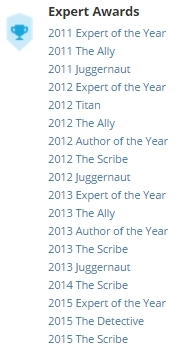
The community became a significant part of my life, and my achievements continued to stack up. By the end of 2015, I was named Expert of the Year, The Detective, and The Scribe for five consecutive years (2011-2015)—a record I believe no other Expert has achieved!

Unforgettable Milestones

In 2017, I hit another high, receiving the coveted ELITE Experts Exchange T-shirt on February 20. That year also marked my last Expert of the Year title, capping off an incredible seven consecutive years at the top.

VMworld 2015

Alongside these achievements, Experts Exchange awarded me an all-inclusive trip to VMworld 2015 in Barcelona,

Experts Exchange Core 2023

and in 2023, I received an invitation to Experts Exchange Core 2023.

The Secret Milestone

Hall of Fame – No.1

In addition to these well-known achievements, there was one secret milestone I had been chasing for over 11 years: becoming the No. 1 expert on the Experts Exchange leader board. On May 6, 2022, I surpassed Guy Hengel (angelIII), reaching 40,983,813 points and claiming the top spot. Today, as I write this in Autumn 2024, I have accumulated 43,843,073 points—a testament to years of dedication and passion for helping others.

Testimonials from the Community

Over the years, I’ve received some incredible testimonials that highlight the impact of my contributions:

  • “Cheers Hancocka for your out-of-hours help, you deserve all the points and more!”
  • “Andrew responds quickly, competently, and zeros in on the fix. He’s like a VMware Yoda!”
  • “What VMware couldn’t solve, hanccocka could!”
  • “Dude, when you finally get your pic of you wearing cape + mask I want my Xlarge pre-ordered.”

These words from the community mean the world to me, and they have fuelled my drive to continue giving back.

Wrapping Up

In conclusion, if you have the patience, dedication, and passion for an IT topic, and want to teach, share knowledge, and help others solve their tech problems, join Experts Exchange. Answer questions, write articles, publish videos—you never know, you might just become the next No. 1 point earner or even an Expert of the Year.

As my brother always says, “Follow your dreams.” While this wasn’t exactly a dream, it was a secret desire:

  • Obtain a Genius T-Shirt 
  • Earn 1,000,000 points in the VMware Topic 
  • Be No. 1 on the VMware Leaderboard 
  • Get an Elite T-shirt 
  • Become the No. 1 Overall Point Earner 

Thanks to Experts Exchange for providing such an incredible platform, and to the community for asking the questions that allowed me to grow and achieve these milestones. Here’s to many more years of collaboration and success in the No. 1 technology community on the web!

Thanks Richard !

EE Elite T-Shirt

EE Elite T-Shirt


All my Expert Exchange Awards 2011-2024

All my Expert Exchange Awards 2011-2024

All my Expert Exchange Awards 2011-2024

All my Expert Exchange Awards 2011-2024

All my Expert Exchange Awards 2011-2024

All my Expert Exchange Awards 2011-2024

Behind the Scenes at Hancock’s VMware Half Hour – Crafting High-Quality Video Content

Monday, September 16th, 2024

Creating engaging, professional-quality video content has become more accessible than ever. At Hancock’s VMware Half Hour, we combine the best tools in the industry—OBS Studio and DaVinci Resolve—with creative expertise to bring VMware-focused content to life. This post gives you an inside look at how we use these tools to produce high-quality videos for platforms like Experts Exchange and YouTube.

The Tools of the Trade

Our production process revolves around two core tools: OBS Studio and DaVinci Resolve, which work together seamlessly to help us create content that stands out.

1. OBS Studio – Recording Made Easy

OBS Studio is an open-source video recording tool that allows us to capture high-quality footage of VMware demos, tutorials, and technical guides. Its flexible interface lets us integrate multiple video sources, including screen shares, webcam feeds, and even external slideshows or graphics, to create a dynamic viewing experience.

Key features we rely on:

  • Screen and multi-source recording
  • Custom overlays and transitions
  • Real-time audio/video synchronization

2. DaVinci Resolve – Polishing Our Work

Once we’ve recorded the content, DaVinci Resolve takes over to handle post-production. It offers advanced editing, color correction, and audio optimization capabilities, ensuring every video looks professional.

Features we use:

  • Non-linear video editing for clean cuts
  • Color grading to maintain consistency across videos
  • Special effects and audio enhancements for a polished finish

Reaching Our Audience: Experts Exchange and YouTube

We publish content on platforms like Experts Exchange, which caters to a professional, technical audience, and YouTube, where we reach a wider community. Each platform has its unique content needs, but our consistent goal is to make VMware concepts accessible, useful, and engaging.

For our Experts Exchange audience, we provide detailed technical guides and troubleshooting advice. You can follow our work there through the Experts Exchange page for VMware-specific articles and tutorials.

Where to Find Hancock’s VMware Half Hour

You can watch our episodes on several platforms. If you’re interested in keeping up with our latest videos, you can follow us on YouTube, Experts Exchange, or check out our Hancock’s VMware Half Hour homepage for updates. We cover a range of topics, from troubleshooting and updates to deeper technical dives into VMware technologies?

Experts Exchange

Twitter

Mastadon

LinkedIn

YouTube

GitHub

The Golden Spurtle and Meltonby Honey: A Winning Combination

Sunday, September 15th, 2024

The Golden Spurtle and Meltonby Honey: A Winning Combination

The art of porridge-making, while seemingly simple, has deep roots in Scottish heritage. Every year, porridge enthusiasts from around the world gather for The Golden Spurtle, an international competition in Scotland where chefs, food lovers, and kitchen wizards showcase their skill in crafting the perfect bowl of oatmeal. Among the many unique entries each year, this time one of my customers decided to take a sweet and unexpected route, with Meltonby honey as a key ingredient.

What is The Golden Spurtle?

The Golden Spurtle, named after the traditional Scottish stirring stick used for making porridge, has been a cornerstone event since 1994. Held annually in the village of Carrbridge, Scotland, it celebrates the fine art of porridge-making in its purest form and in innovative varieties. Participants compete in three main categories:

  1. Traditional Porridge (just oats, water, and salt),
  2. Specialty Porridge (where imagination and creativity come into play), and
  3. People’s Choice (where the audience selects their favourite dish).

Entrants are judged on factors such as consistency, colour, taste, and presentation. The competition’s standards are high, making even the simplest bowl of oats a true test of skill and artistry.

The Role of Meltonby Honey

Honey has long been cherished as a natural sweetener, but Meltonby honey brings something special to the table. Sourced from the rich, rolling countryside, it’s known for its delicate floral notes and rich, golden hue. It’s no surprise that one of my customers saw this honey as the perfect secret ingredient to stand out in The Golden Spurtle competition.

By incorporating Meltonby honey, they’re not only adding sweetness but a layer of complexity to the dish. Honey’s natural sugars interact with the oats in a way that enhances their texture and flavour. The unique floral tones from the honey also add an extra dimension, making each bite memorable.

Why Honey in Porridge?

Honey has always been a favourited addition to porridge due to its versatility. Whether drizzled on top or mixed into the oats during cooking, it brings a natural sweetness without overwhelming the dish. But beyond the sweetness, honey provides a touch of acidity and floral undertones, adding depth to an otherwise simple dish.

Meltonby honey, in particular, pairs beautifully with oats. Its unique flavour profile comes from the rich variety of flowers available to the bees, producing a honey that is slightly fruity with a light earthiness. When combined with the creamy texture of porridge, it creates a balanced flavour that’s neither too sweet nor too heavy.

A Sweet Path to Victory?

My customer’s entry into The Golden Spurtle with Meltonby honey is a wonderful example of how local, high-quality ingredients can elevate a dish. In the world of competitive porridge-making, where precision and creativity are key, a seemingly small choice like using a specific type of honey can make all the difference.

Could Meltonby honey help secure a win? We’ll have to wait and see, but one thing is certain: the judges are in for a treat!

Conclusion

Competitions like The Golden Spurtle are about more than just cooking; they’re about storytelling, tradition, and innovation. By using Meltonby honey in their porridge recipe, my customer is bringing a taste of their local community to a global stage, demonstrating that sometimes, the smallest ingredients can have the biggest impact. Whether or not they take home the title, the combination of hearty oats and golden honey is already a winner in the hearts of food lovers.


Honey Rush: An Unofficial Open Day, Pop Star Sister Surprise, and the Final Forage!

Saturday, September 14th, 2024

A slightly delayed start to the apiaries this morning, as it seemed like an unofficial open day at meltonbyhoney.com with so many people queuing for local Yorkshire honey! We were especially excited to have a visit from a pop star sister—if you know, you know! A big thank you to all my new and returning customers for your amazing support!

The weather was perfect today after the recent chilly autumn spell, making it ideal for one final visit to the hives. Today’s task was to clear the honey boxes (also known as shallows or supers), and begin treatment for the varroa mite. We always ensure the honey is removed before any treatments, following strict guidelines. The serial and batch numbers of Apivar are recorded meticulously in our medical records, in accordance with VMD regulations.

After that, it was time to add some fondant for winter feeding, insert the entrance blocks, and wish the bees luck for the colder months ahead. Hopefully, if the weather holds, they’ll continue to forage on the last available crop of the year—ivy. But with the first frost, the ivy blooms will be gone, signaling the true end of the foraging season. Thank you, bees, for another season of wonderful honey!

Ross Rounds: The Sweet Simplicity of Honey Without Extraction! – From Hive to Your Hands – A Natural Approach to Comb Honey Production

Tuesday, September 10th, 2024

We use Ross Rounds in Beekeeping to produce “cut” section “honey comb.” So from hive to you!

Ross Rounds are a unique beekeeping innovation, designed for honey production that allows honey to be harvested without the need for traditional extraction methods. Invented and patented by Dr. Elton J. Ross in the early 1970s, Ross Rounds were created to simplify comb honey production and offer beekeepers a cleaner, more efficient system. Let’s dive into how they work and why they’ve stood the test of time.

Features:

  • Circular Design: Ross Rounds frames are circular, creating honeycombs in a round shape. This design is distinct from the conventional rectangular frames used in beekeeping.
  • Comb Integrity: The honeycomb is maintained in its original form, and honey is harvested directly from these combs.

How They Work:

  • No Extraction Required: Unlike traditional honey extraction, where honey is removed from the combs using a centrifugal extractor, Ross Rounds are designed to be used as they are. 
  • Comb Preservation: Since the honeycomb is not subjected to extraction, it remains intact and can be used for other purposes or sold as a whole comb product.

Benefits:

  • Unique Product: Honey in Ross Rounds offers a unique product with the honeycomb intact, which can be a special feature for consumers who enjoy raw honey in its natural comb form.
  • Reduced Processing: The lack of need for extraction simplifies the honey harvesting process and reduces equipment requirements.

Considerations:

  • Handling and Storage: Beekeepers must handle Ross Rounds carefully to ensure the combs remain intact and undamaged.
  • Market Appeal: The distinctive round combs can be a selling point but may require specific marketing to highlight their unique qualities.

The History of Ross Rounds

Ross Rounds were created and patented by Dr. Elton J. Ross in the early 1970s. His goal was to develop a cleaner, more efficient way of producing comb honey. The round design was an innovative solution that made it easier for beekeepers to harvest and sell honey in its natural form without extraction. Since then, Ross Rounds have become a popular method for producing attractive, comb honey products that consumers love.

Ross Rounds provide an innovative approach to honey harvesting, offering a product that showcases honey in its natural comb form without the need for extraction. This enduring design has revolutionized how beekeepers harvest and market honeycomb, making it a beloved choice for beekeepers and consumers alike.

Part 18: HOW TO: Update VMware ESXi 7U1 (7.0.1) to VMware ESXi 7U2a (7.0.2) using an ISO image

Monday, September 9th, 2024

This video will show you how to update ESXi 7U1 to ESXi 7.0U2a using an ISO image to get your system up to the latest release. In this tutorial, the version of ESXi 7.0 installed is ESXi 7.0U1, but this article can be followed to upgrade any version of ESXi 7.0. If your ESXi host has access to the internet, there is a quicker method shown in this video – HOW TO: Update VMware ESXi 7.0U2 to ESXi 7.0U2a direct from VMware.

VMware has removed many older legacy processors (CPUs) from ESXi 7.0U2, and also storage and network controllers. Please check the VMware Hardware Compatibility Lists (HCL) here.

for more additional guidance and a step by step tutorial with screenshots, which supports this video, please see the following article, which this video is based on  HOW TO: Upgrade VMware ESXi 5.5 to VMware ESXi 6.0 using an ISO image

It is not recommended to install ESXi 7.0 on USB or SD cards because of higher write I/O, and the SD cards are currently suffering because they are not higher endurance. Problems have been found in the wild.

It is technically still supported; eventually, this may filter down through the server vendors…

Some additional information regarding the use of USB and SD cards with VMware vSphere Hypervisor 7.0 (ESXi 7.0) and installations.

Installing ESXi on a supported USB flash drive or SD flash card (2004784)

vSphere 7 – ESXi System Storage Changes

VMware vSphere 7.x on Dell EMC PowerEdge Servers Getting Started Guide

Virtual SAN Considerations When Booting from a Flash Device

VMFS-L Locker partition corruption on SD cards in ESXi 7.0 (83376)

Part 17: HOW TO: Update VMware ESXi 7.0U2 to ESXi 7.0U2a in 5 easy steps

Monday, September 9th, 2024

This video will show you how to update ESXi 7.0U2 to ESXi 7.0U2a in 5 easy steps to get your system up to the latest release. In this tutorial, the version of ESXi 7.0 installed is ESXi 7.0U2, released on 20 April 2021, but this article can be followed to upgrade any version of ESXi 7.0. If your ESXi host has access to the internet, there is a quicker method shown in this video – HOW TO: Update VMware ESXi 7.0U2 to ESXi 7.0U2a direct from VMware.
VMware has removed my older legacy processors (CPUs) from ESXi 7.0U2, and also storage and network controllers, please check the VMware Hardware Compatability Lists (HCL) here.

for more additional guidance and a step by step tutorial with screenshots, which supports this video, please see the following article which this video is based on HOW TO: Update VMware ESXi 7.0U2 to ESXi 7.0U2a in 5 easy steps

It is important to note in this video when I discuss the use of USB flash drives and SD cards for installations of ESXi 7.0 the word “not-supported” should be replaced with “not recommended“!

It is not recommended to install ESXi 7.0 on USB or SD cards, because of higher write I/O, and the SD cards are currently suffering because they are not higher endurance. Problems have been found in the wild.

It is technically still supported, eventually, this may filter down through the server vendors.

Some additional information regarding the use of USB and SD cards with VMware vSphere Hypervisor 7.0 (ESXi 7.0), and installations.

Installing ESXi on a supported USB flash drive or SD flash card (2004784)

vSphere 7 – ESXi System Storage Changes

VMware vSphere 7.x on Dell EMC PowerEdge Servers Getting Started Guide

Virtual SAN Considerations When Booting from a Flash Device

VMFS-L Locker partition corruption on SD cards in ESXi 7.0 (83376)

Part 16: HOW TO: Update VMware ESXi 7.0U2 to ESXi 7.0U2a direct from VMware

Monday, September 9th, 2024

This video will show you how to update ESXi 7.0U2 to ESXi 7.0U2a in 2 easy steps to get your system up to the latest release. In this tutorial, the version of ESXi 7.0 installed is ESXi 7.0U2, released on 20 April 2021, but this article can be followed to upgrade any version of ESXi 7.0. If your ESXi host has access to the internet, this method will pull the update direct from the internet and update the ESXi host. If you prefer the slower old fashioned method or your host does not have access to the internet, please follow this article – HOW TO: Update VMware ESXi 7.0U2 to ESXi 7.0U2a in 5 easy steps

VMware has removed my older legacy processors (CPUs) from ESXi 7.0U2, and also storage and network controllers, please check the VMware Hardware Compatibility Lists (HCL) here.

for more additional guidance and a step by step tutorial with screenshots, which supports this video, please see the following article which this video is based on HOW TO: Update VMware ESXi 7.0U2 to ESXi 7.0U2a direct from VMware.