In this episode of Hancock’s VMware Half Hour, we walk through creating an Offline Depot using a Python script to support VMware Cloud Foundation (VCF) 9.0 deployments in air-gapped or isolated environments. We begin with a brief update on the VCF Installer, remove previously downloaded components, and disconnect our offline repository from a Synology NAS. Then we dive into the technical steps—running a Python script on Ubuntu using the http_server_auth.py script from GitHub, mounting an NFS export, verifying FQDN configuration, and checking access to the depot via a web browser. Finally, we show how to configure the VCF Installer to use this offline depot, perform downloads directly to the installer, and verify SSH shell activity to ensure everything is working correctly. This practical guide is ideal for anyone managing VCF in restricted environments or those who need a secure and reusable local depot setup.
HOW TO: Create an Offline Depot with a Synology NAS | VCF 9.0 Component Deployment Guide
In this video, we walk through the step-by-step process of creating an offline depot using a Synology NAS for VMware Cloud Foundation (VCF) 9.0. Whether you’re dealing with limited internet access or building a secure deployment workflow, this guide will help you set up a fully functional offline repository that integrates seamlessly with the VCF installer.
As of July 30th, Broadcom has released updated VCF 9.0 metadata, and we’ll use that to demonstrate how to populate the repo.
What You’ll Learn:
How to install and configure the Web Station and Apache HTTP Server 2.4 on Synology
How to enable Basic Authentication required by VCF
Where to upload and extract the VCF 9.0 metadata bundle
How to verify access via browser and the VCF 9.0 installer
So in today’s, crude and experimental research I thought I would connect all our VMware vSphere Hypervisors (ESXi 5.5 build 1892794) to a NFS datastore presented to the ESXi Hosts from a Synology NAS, and we’ll try the following tests
I deployed a small Windows 7 template, onto the NFS datastore as follows
No Cache Enabled – 3 minutes 27 seconds to deploy
Read and Write Cache Enabled – 2 minutes and 40 seconds to deploy.
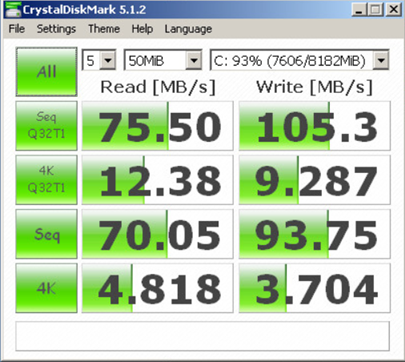
Time for some more testing – The template deployed to the datastore was converted to a virtual machine, and the following tests were performed using CrystalDiskMark 5.1.2 in the virtual machine.
NFS Exported volume No SSD Cache on the Synology NAS.
NFS Exported volume Read and Write SSD Cache on the Synology NAS.
NFS Exported volume Read only SSD Cache on the Synology NAS.
Some a bunch of very confusing results! And every time I test the results are similar.
In my recent article comparing the performance of the addition of a Read and Write SSD Cache to a volume on a Synology NAS, I started to look in detail at whether this cache benefits any other services on a Synology NAS running DSM 5.2.
In this experiment I’m looking at the Plex Media Server, and I’ve setup two identical Synology NAS, running DSM 5.2 Build 5644 Update 5, both with Plex Media Server 0.9.15.2.1663, both are streaming the same 1080P Blue Ray movie to the same Plex client via WiFi, at the same time. The first NAS has no cache, the second NAS has 120GB of read and write cache, and these are the results.
The second NAS with the read and write cache enabled shows, lower Disk Utilization 1% compared to 5%.
Again you can see here, 6% (no cache), 1% (cache)
The same stats from both NAS, No cache and cache enabled, what is interesting is the CPU load results are lower on the cache enabled version!
I’ve been recently experimenting with SSDs (solid state disks), to accelerate my spinning rust in my Synology NAS.
Recently in DSM, a new SSD cache option is available, which allows you to create a read or write cache with 1 or 2 SSD devices respectively.
Here are some results, which I’ve graphed
In my very quick and crude tests, I could see an improvement in Writing to the NAS, which doubles in performance. Read speed is very similar, and the cache was “warmed-up” before testing.
And here’s a video of the new Synology SSD Cache Read Hit Rate graphic, which looks a little graphic equalizer, from the 70-80s, so I’ve dropped a music track in the background! I thought it only right to over-flange (distort!) the track, so you may want to turn down your volume!






![[Valid RSS]](http://andysworld.org.uk/images/valid-rss.png "Validate my RSS feed")